Showing posts with label Asexual. Show all posts

Wednesday, 29 March 2017

Mary - Asexual Reproduction

Asexual Reproduction:

What is asexual reproduction? Asexual reproduction is when only one organism(parent) or part is required and new organism is produced like unicellular organisms.
How it occurs/happens? Asexual reproduction only needs one parent, so the offspring are clones of the parent.
What are different types of Asexual reproduction in plants and in animals? Some examples of an asexual reproduction in plants and animals include, Vegetative, Propagation, Starfish and the Spider Plant.
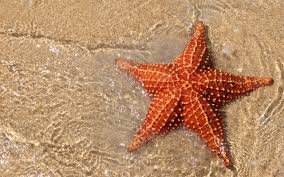
Image result for starfish
What are the benefits of asexual reproduction for plants and animals? Some benefits of Asexual Reproduction include, A better chance of survival will be hand(more species), Just a little time and resources are used and It is a much more simpler procedure.

Friday, 17 March 2017

Us & Them - Sexual & Asexual

Task 1: You will encounter the terms listed below in this lesson. Find their meanings


  1. Asexual reproduction - Formation of a new individual from the cell of a single parent.
  2. Sexual reproduction - Involves the fusing of the gametes from 2 parents to form offspring. Produces offspring that are not genetically identical. A lot of variation is possible.
  3. Clones - Every new organism produced is genetically identical to the parent.
  4. Stolons or runners - Horizontal above-ground stems from which roots can grow to start off a new plant, Eg strawberry, spider plants.
  5. Rhizomes - An underground runner that gives rise to new plants eg ginger, iris, lilies.
  6. Bulbs - Underground stems that divide by mitosis allowing many new plants to form new bulbs eg onion, garlic.
  7. Tubers - Underground storage stem from which new plants can grow after a dormant season eg dahlia, potato.
  8. Corm - A bulb-like but solid, fleshy underground stem eg dahlia, taro, crocus.
  9. Budding - Offspring develop as a growth on the body of the parent. Eg jellyfishes, echinoderms, tapeworms. In corals the buds remain attached to the parent resulting in the formation of colonies.
  10. Fragmentation - Parts of a plant break off and grow into a new plant. May include vegetative propagation in which part of the plant now specialised for reproduction breaks off and grows into a new plant.
  11. Regeneration - If a piece of parent is detached, it can grow and develop into a completely new individual eg starfish.
  12. Artificial propagation - Artificial reproduction/propagation is the creation of new life by other than natural means available to an organism. Examples include artificial insemination, in vitro fertilization, cloning and embryonic splitting, or cleavage.