Monday, 12 June 2017

Mary - Acids and Bases

For one Period of science we were given a task about Acids And Bases. We were to complete the questions that were about the mini paragraphs , which were all about the different parts of acids and Bases. Here is what I have learnt so far:
Questions about acids
1.              Name 3 naturally occurring acids. Citric Acid, Lactic Acid and formic Acid.
2.              Name 3 “artificial” acids. Sulfuric Acid, Hydrochloric Acid and Nitric Acid.
3.              Why are acids dangerous? How should all acids be treated? Acids are corrosive, and attack many materials including flesh. Acids should be kept away very well from the eyes, mouth and any broken skin.
4.              What is the difference between a concentrated acid and a dilute acid? Diluted acids are solutions that contain a little amount acid and a lot of waterl. Concentrated acids are solutions that contain a lot of acid and not much water.
5.              Give two reactions by which acids may be recognised. Their reaction with magnesium metal and sodium carbonate causes both materials to dissolve in acids with vigorous fizzing.
6.              What element is present in all acids? Hydrogen.

7.              What is the difference between strong acids and weak acids? When acid reacts some or all of the hydrogen is given up. Strong acids release hydrogen very easily, while weak acids find it difficult to release the hydrogen.

Questions about bases

8.              What is a base? They are the chemical ‘opposites’ of acids.
9.              What is the special name for a base that is soluble in water? Alkalis.
10.            Give the names and uses of two alkalis found in the home. Ammonia Solutions in bath and sink cleaners, calcium hydroxide(lime) for adding acid soils, and sodium hydrogen carbonate(bicarbonate of soda) in cooking and medicines.
11.     What ions do bases always produce in solution? Hydroxide Ions.

Questions about neutralisation

1.              What two compounds are formed when an acid reacts with a base? Salt and Water
2.              Why is the reaction called a neutralisation reaction? Because the products are neither acidic nor basic.
3.              Give two examples of neutralisation reactions in everyday life. Tooth decay and Sharp pain in your Stomach.
4.              Which strong acid occurs naturally in your stomach? Hydrochloric Acid.

Questions about indicators

5.              What is an indicator? An indicator is a chemical compound that changes colour and structure when exposed to certain conditions.
6.              How could you make an indicator in the laboratory? By warming red cabbage leaves with a mixture of water and industrial methylated spirits.
7.              Give the colour of litmus with acids and alkalis. Red in acid solution and Blue in Alkaline.

Thursday, 8 June 2017

Mary - Atoms and Electronic Configuration


For the past few weeks in science we have been learning about Atoms and Electronic Configuration.  We have learnt the many parts of an atom and what it contains, such as the electrons, protons and neutrons. We have learnt what they are to the atom and how there role is important to the functioning of an atom. So here is a Google Drawing that I have made that explains what an atom and the electronic configuration is!

Tuesday, 30 May 2017

Mary - Tobacco Affects On Hauora


For Health we are learning about Exploring Substances, like drugs and alcohol. For this task we had to write down the positive and negatives of Tobacco that may affect our Hauora(Well-Being).

Thursday, 13 April 2017

Mary - Science Revision

Revision:

  1. What is a cell? How it is related to all organisms? The building blocks of life.
  2. Draw a typical cell and label it.
  3. Differentiate between plant cell and animal cell. Plant cells can be larger than animal cells. Although plant and animal cells have many similarities, plant cells have vacuoles, a cell wall and chloroplasts.
  4. Write the functions of cell wall, cell membrane, cytoplasm, mitochondria, vacuole, chromosomes and gene.
Cell Wall - Provides Strength for the plant.
Cell Membrane - Hold everything inside and controls what comes in and out.
Cytoplasm - Holds the cell organelles and contain nutrients and chemical.
Mitochondria - Holds out respiration to give the cell energy.
Vacuole - Helps keep the cell firm.
Chromosomes - A thread-like structure of nucleic acids and protein found in the nucleus of most living cells, carrying genetic information in the form of genes.
Gene - A unit of heredity which is transferred from a parent to offspring and is held to determine some characteristic of the offspring.
  1. Define Photosynthesis and explain the process. Give chemical and word equation. Photosynthesis is a process in which plants prepare their food in the presence of sunlight, by taking carbon dioxide from the environment and water from the Earth.
Equation:

  1. Define Respiration and explain the process. Give Chemical and word Equation. Respiration is the process that the body uses to relate energy from digested food(glucose).

Wednesday, 29 March 2017

Mary - Asexual Reproduction

Asexual Reproduction:

What is asexual reproduction? Asexual reproduction is when only one organism(parent) or part is required and new organism is produced like unicellular organisms.
How it occurs/happens? Asexual reproduction only needs one parent, so the offspring are clones of the parent.
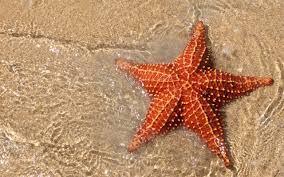
What are different types of Asexual reproduction in plants and in animals? Some examples of an asexual reproduction in plants and animals include, Vegetative, Propagation, Starfish and the Spider Plant.
Image result for starfish
What are the benefits of asexual reproduction for plants and animals? Some benefits of Asexual Reproduction include, A better chance of survival will be hand(more species), Just a little time and resources are used and It is a much more simpler procedure.

Tuesday, 28 March 2017

Mary - Health: Fonofale

Fonofale:

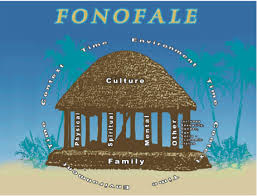
What is the fonofale? The Fonofale is used to describe a Pacific view of important parts in healthy development. The Fonofale model was created by Fuimaono Karl Pulotu-Endemann as a Pacific Island model of health.
Image result for fono fale

What is different about it compared to Hāuora? There is no walls just posts, there is roof and a foundation. Also their is two different values, Culture which represent the cultural values and beliefs and also ‘other’ which relates to gender, sexual orientation, age, social class, employment and education. Another thing that is different about the Fonofale compared to Hauora is it is encased in a shell, with three dimension.
These dimensions are:
Environment: This dimension shows the relationships and uniqueness of Pacific people to their physical environment.

Time: This dimension relates to the actual or specific time in history that impacts on Pacific people.

Context: This dimension relates to the where, how, what and the meaning it has for that particular person or people.

What is similar compared to Hāuora? Some of the values of the Fonofale are similar to the Hauora values such as, physical well-being, mental and spiritual well-being.

Do you like the Hāuora model or the fonofale model more? Why? I like the Fonofale model more because I can relate to it more with the traditional Pacific Island values.

Wednesday, 22 March 2017

Mary - Cells

For science this year, 10KLE learnt about Living and Non-Living things, A Cell Structure and also Functions of Cell Parts(Organelles).

Living & Non-living Things:
I have learnt that the study of living things is called Biology. There are seven characteristics that a Living thing show, Movement, Respiration, Sensitivity, Growth, Reproduction, Excretion and Nutrition. Some non-living things show one or two of the seven characteristics of living things, such as Machines like washing machines. They can move, but only if it has some type of energy resource to get it moving.
Non-living things can be divided into two groups:
First come those which were never part of a living thing, such as stone and gold.
The second group are those which were once part of living things, such as coal. Coal was formed when trees died and sank into the soft ground. Paper is also another example of a non-living thing that was once living, because it was made from trees. Jam is another example of a non-living thing that was once part of a living thing, this is because it was made from the fruit of a plant.
A table showing what Living and Non-living things can do:
Living Things
Non-living Things
They can grow
They can’t Reproduce
They can reproduce
They can’t Grow
They can Move on their Own
They can’t move, only if a energy resource helps it to.
They can Sense
They can’t Excrete.
They can Respire
They can’t Sense

Labelled Cell - Animal Cell & Plant Cell:
Image result for cells labelled


Cell Parts & Their Function:

Cell Membrane: Very thin transparent sheet. Holds everything inside and controls what comes in and out..
Cell Wall: Made of cellulose and only found in plants, also thick and strong. Provides strength for the plants.
Nucleus: Small dark circular spot. The control center for the cell and contains genes.
Cytoplasm: Watery jelly like substance which fills most of the cell. It holds the cell organelles and contains nutrients and chemicals.
Vacuole: Water filled bubble. Helps keep the cell firm.
Chloroplasts: Small green structure found only in the green part of plants. They make sugar for the plant.
Mitochondria: Squiggly green thing. The part of the cell that does respiration to give the cell energy.

Photosynthesis:
What is Photosynthesis? Photosynthesis is a process in which Carbon Dioxide and water are used by the plants to produce carbohydrate and oxygen in the presence of sunlight.
What are the substances required? The substances that are required for photosynthesis are, Water from the soil, carbon dioxide from the air, energy from the sunlight which is then absorbed by the chlorophyll in the chloroplasts of leaf cells.